At Mason District Hospital, our Imaging Department provides a full range of diagnostic services in a compassionate, convenient setting—close to home.
We combine state-of-the-art technology with highly trained, caring technologists,
offering truly High-Tech, High-Touch care. Our team guides you every step of the way,
making your experience as comfortable and reassuring as possible.
For questions or to schedule a service call (309) 543-8596.
Our Services
- Computed Tomography (CT) Imaging
- Dual-Energy X-Ray Absorptiometry (DEXA)
- Magnetic Resonance Imaging (MRI)+
- Mammography
- Nuclear Medicine
- Positron Emission Tomography – Computed Tomography (PET-CT)
- Ultrasound
- X-Ray
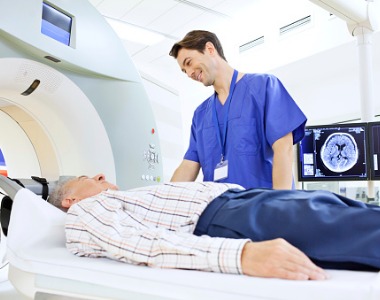
Computed Tomography (CT) Imaging
- What it is: CT scans use X-rays and computers to produce detailed cross-sectional
images of the body.
- What to expect: You will lie on a padded table that moves through the scanner. The procedure is fast and designed to minimize discomfort, even for children and seniors.
- Why it’s important: Provides precise images to help your doctor diagnose conditions accurately and efficiently.
- Who performs it: Certified technologists guide you through every step for a smooth, reassuring visit.
All of these services are offered through using state-of-the-art equipment and are provided by highly-trained, professional technologists. Another way Mason District Hospital is High-Tech, High-Touch.
Dual-Energy X-Ray Absorptiometry (DEXA)
- What it is: Measures bone density to detect osteoporosis and assess fracture risk.
- What to expect: You will lie on a padded table for about 25 minutes. Safe, painless, no special preparation, and no clothing changes required.
- Why it’s important: Helps your doctor evaluate bone health and develop a plan to reduce fracture risk.
- Who is at risk: Family history of osteoporosis, low body weight, low calcium intake, smoking, mobility issues, hyperthyroidism, age.
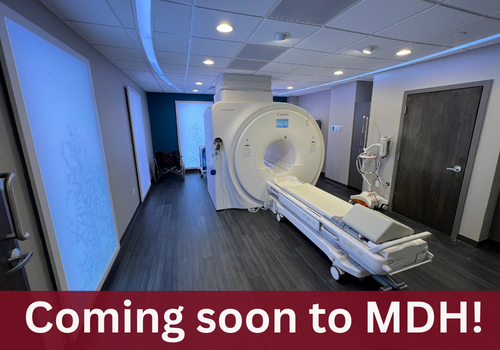
Magnetic Resonance Imaging (MRI)
- What it is: MRI uses magnets, radio waves, and computers to create detailed images
of organs, tissues, and bones.
- What to expect:
- You will lie on a padded table that slides into a large magnet.
- Non-invasive, no radiation exposure.
- Who performs it: Mobile Imaging services with a high-frequency, high-field 1.5 Tesla MRI unit.
- Coming soon: Permanent MRI in 2026!
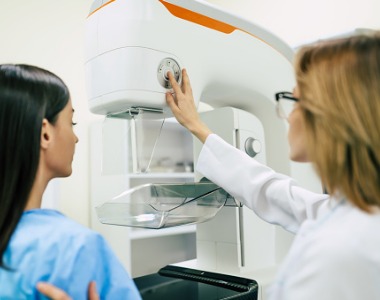
Mammography
- What it is: Digital Mammography uses low-dose X-rays to create images for early
detection of breast abnormalities.
- What to expect:
- The scan is quick and performed by a certified technologist.
- Images are shared immediately with your physician for faster results.
- When to start: Annual screening is recommended starting at age 40 by leading health organizations.
- Who performs it: Certified mammographers committed to patient comfort and accurate results.
Nuclear Medicine
- What it is: Uses a very small amount of radioactive material to examine organ function
and detect abnormalities.
- Types of exams:
- Single Photon Emission Computed Tomography (SPECT)
- Whole-body scans
- Cardiac imaging with stress tests
- Thyroid imaging and treatment
- Why it’s important: Assesses kidney function, heart blood flow, lung health, gallbladder, bones, and detects cancer.
- Who performs it: Certified nuclear technologists dedicated to patient comfort and care.
Positron Emission Tomography – Computed Tomography (PET-CT)
- What it is: Combines PET (shows body function) and CT (shows body structure) for a
complete diagnostic view.
- What to expect:
- The PET tracer may be injected, swallowed, or inhaled depending on the exam.
- The CT scan produces detailed images to locate abnormalities.
- Why it’s important:
- Detect and monitor cancer
- Evaluate brain disorders such as Alzheimer’s, epilepsy, or tumors
- Assess heart disease and blood flow
- Who performs it: Mobile imaging services with a GE Discovery integrated PET and CT scanner in one gantry.
Ultrasound
- What it is: Ultrasound (sonography) uses high-frequency sound waves to create
images of your body.
- What to expect:
- A gel is applied to the skin and a handheld probe is moved across the area.
- Non-invasive, painless, and safe for adults, children, and babies.
- Why it’s important: Provides real-time images for diagnosing a variety of conditions.
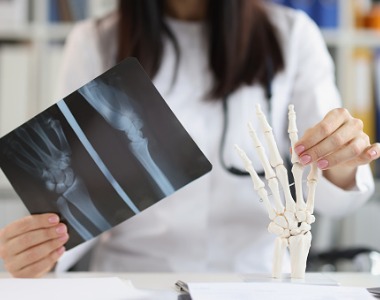
X-Ray
- What it is: X-rays use a focused beam of photons to produce images of bones and soft
tissues.
- What to expect:
- Quick, painless imaging.
- Some exams may require specific positioning, guided by a technologist.
- Why it’s important: Commonly used to detect broken bones and other conditions.
- Who performs it: Highly trained technologists ensuring safe, accurate imaging.
Radiology Interpretation
All exams are reviewed by OnRad, Inc. Radiology Services, a team of board-
certified radiologists available 24/7, 365 days a year.
They focus on accuracy, reliability, and timely results to support your doctor in providing
the best care.